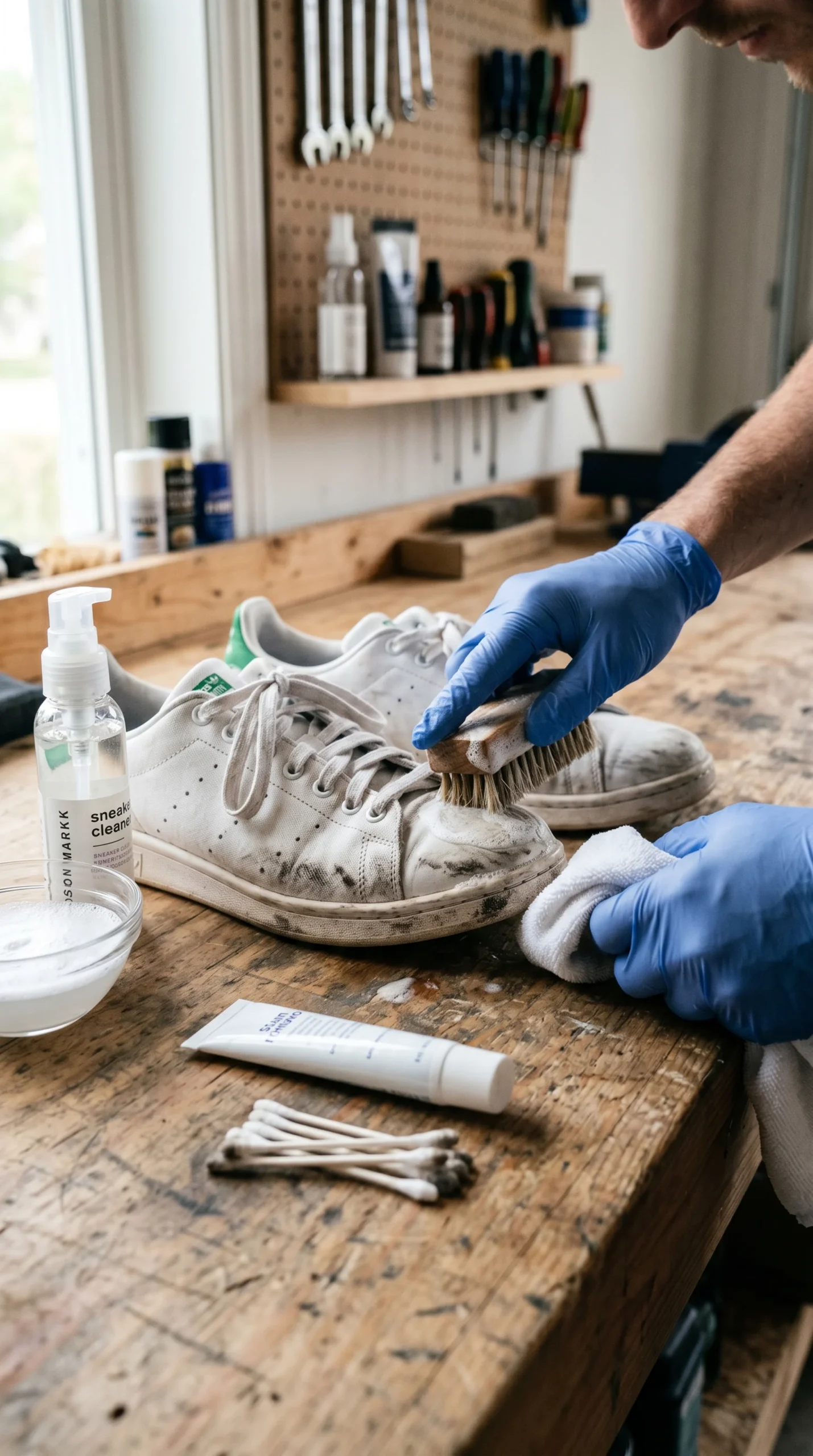
Not all sneaker stains are created equal. Mud on a canvas low-top responds differently than oil on suede, and what cleans mesh can ruin nubuck. Knowing the material you’re working with is the first step to removing a stain without making it permanent. This guide breaks down how to approach common stains by sneaker material — and when it’s time to stop and hand the job off to a professional.
Why Material Matters Before Anything Else
Most at-home sneaker cleaning mistakes happen when people reach for the same product regardless of material. A soapy brush that works on rubber soles can strip the finish from smooth leather. A cleaning wipe that’s safe on canvas can cause water staining on suede. Before you touch a stain, identify what you’re working with. Common sneaker upper materials include mesh, canvas, leather, smooth leather, nubuck, suede, and synthetic fabrics. Each has a different tolerance for moisture, agitation, and cleaning agents.
Stain Removal by Sneaker Material
Mesh and Canvas
These are the most forgiving materials to clean. For surface dirt and light stains, a soft-bristle brush with a small amount of mild dish soap and warm water will do most of the work. Scrub gently in circular motions, then wipe away with a damp cloth. Avoid soaking the shoe or putting it through a machine wash — heat and prolonged moisture can break down the adhesive at the sole.
For tougher stains like grass, food, or scuff marks, a dedicated sneaker cleaner solution will outperform dish soap. Apply it with a soft brush, let it sit for 30 seconds, then work it in lightly before wiping clean. Allow the shoe to air dry away from direct sunlight or heat.
Smooth Leather
Smooth leather is resilient but not indestructible. For everyday dirt and smudge marks, a damp microfiber cloth is often all you need. For deeper stains, use a leather cleaner — not a general-purpose cleaner — applied with a soft cloth in small, controlled passes. Never soak the leather or use harsh scrubbing tools. After cleaning, apply a leather conditioner to restore moisture and prevent cracking.
Ink stains and deep oil marks on leather are difficult to reverse at home without risking discolouration. These are cases where professional treatment is worth it.
Suede and Nubuck
These materials require the most caution. Water is often the enemy here — applying it incorrectly can leave permanent tide marks. For dry stains like dirt or dust, use a suede eraser or a soft dry brush to lift particles without pressing them deeper into the nap. Always brush in one direction to keep the texture consistent.
For oil-based stains on suede, apply a small amount of cornstarch or talcum powder to absorb the oil, let it sit for several hours, then brush away gently. This won’t always fully remove the stain, but it reduces the visibility significantly. Liquid cleaners on suede should only be used if they’re specifically formulated for the material.
If the suede nap is matted, crushed, or the stain is set in, professional restoration is the right call. Attempting to force the nap back up or scrub a set stain typically causes more damage.
Rubber Soles and Midsoles
Yellowing and scuff marks on rubber soles are common, especially on white midsoles. A firm-bristle brush with a cleaning solution or a dedicated sole cleaner handles most surface staining. For deeper yellowing, a sole brightening product can help restore the white — apply it, cover with plastic wrap, and leave the shoe in indirect sunlight for a few hours. This process works on oxidation, which is the main cause of yellowing on EVA and rubber soles.
Stains That Are Hard to Remove at Home
Some stains exceed what household cleaning can safely address. These include:
- Set-in oil or grease on suede or nubuck
- Ink or dye transfer on leather
- Deep mud that has dried and bonded to mesh fibers
- Bleach or chemical stains on any material
- Mold or mildew growth inside or outside the shoe
Attempting to treat these without the right products and technique often causes irreversible damage — discolouration, material breakdown, or permanent texture changes. At that point, the cost of professional restoration is usually less than what you’d spend trying to fix a DIY mistake.
Tips to Keep Stains from Setting
Speed matters with stains. The longer a substance sits on a sneaker, the deeper it bonds with the material. Blot — don’t rub — fresh stains as quickly as possible. Rubbing spreads the stain and pushes it further into the material. Keep a small sneaker cleaning kit with a soft brush, a gentle cleaner, and a microfiber cloth so you can respond to stains quickly rather than letting them wait.
For sneakers you wear frequently or want to protect long-term, applying a water and stain repellent spray after cleaning creates a barrier that makes future stains easier to remove.
For stains that are beyond what home cleaning can fix, Fixano offers professional sneaker restoration with door-to-door pickup and delivery across Los Angeles and Orange County. Book a pickup through the Fixano app and get your sneakers back looking right.
Leave a Reply