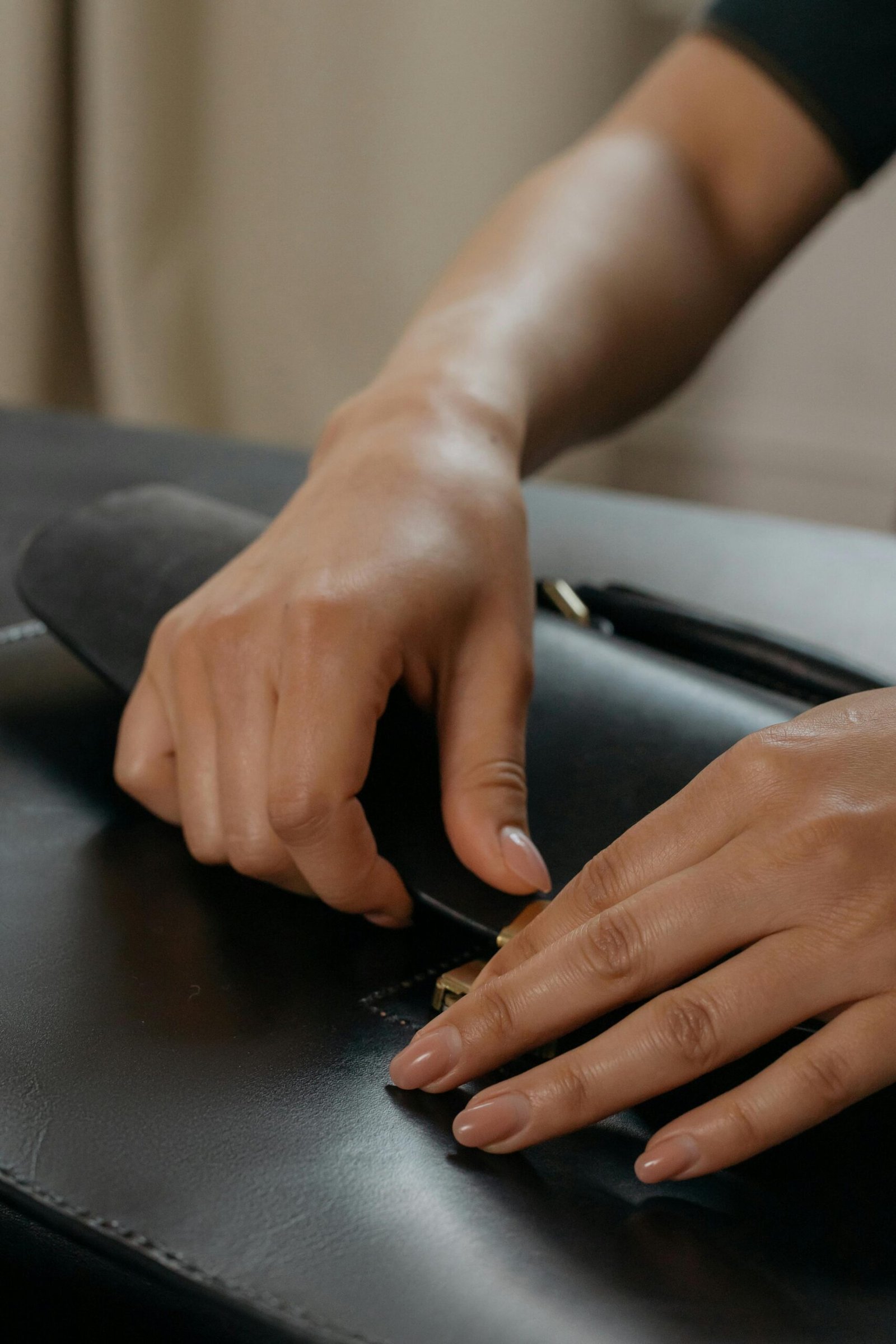
A good leather bag gets better with age — if you treat it right. The problem is that most advice online is either dangerously oversimplified or written for the wrong type of leather. Here’s a practical guide that actually accounts for the differences.
First: Know What Type of Leather You Have
This changes everything about how you clean and care for a bag.
Full-grain leather is the highest quality — durable, develops a patina over time, and responds well to conditioning. Top-grain leather is slightly processed, more uniform in appearance, and common in designer bags. Genuine leather is a lower grade, more processed, and less forgiving of harsh products. Suede and nubuck are the most delicate — water is the enemy, and they require completely different care from smooth leather. Coated leather like vachetta (used on Louis Vuitton pieces) stains permanently from water and skin oils.
If you’re not sure what type your bag is, err strongly on the side of doing less.
What You Can Safely Do at Home
Surface dust and light dirt
A clean, dry microfiber cloth. That’s it. Rub gently in circular motions. For most day-to-day maintenance, this is all you need.
Conditioning smooth leather
Use a dedicated leather conditioner — not shoe polish, not Vaseline, not olive oil (yes, people try this). Apply a small amount with a soft cloth, leave for 10 minutes, then buff off. This keeps the leather supple and prevents cracking.
Minor scuff marks on smooth leather
A leather eraser works for light surface scuffs. For anything deeper, stop — you risk stripping the finish, which makes it look worse and harder to repair professionally later.
What You Should Never Do at Home
- Use water directly on suede, nubuck, or vachetta. A single water drop can leave a permanent mark on untreated leather.
- Use baby wipes. Most contain alcohol, citric acid, or fragrance — all of which degrade leather over time.
- Use household cleaners (Windex, all-purpose sprays, etc.). These strip protective coatings and dry out the leather.
- Over-condition. Too much product makes leather sticky, which attracts more dirt and can darken the material permanently.
- Heat-dry a wet leather bag. If it gets wet, stuff it with newspaper to hold its shape and let it dry at room temperature. Never use a hair dryer.
When to Call a Professional
Some situations genuinely require professional tools, products, and expertise:
Ink stains
The longer you wait, the deeper they set. Home treatments frequently spread ink further into the leather rather than removing it.
Mould and mildew
This requires a careful antifungal treatment process. Incorrect handling can permanently alter the leather’s texture and leave visible marks.
Fading or colour loss
Re-dyeing and colour matching requires professional knowledge of the specific leather type, finish, and dye formula. Done wrong, it’s difficult to correct.
Deep scratches and structural damage
Leather filler and colour blending is a skilled process. The difference between a good repair and a visible patch is in the technique.
How Fixano Handles Leather Bag Restoration
Fixano’s leather bag restoration service covers everything from a basic deep clean to full colour restoration. We pick up directly from your home across Los Angeles and Orange County, assess each bag individually on intake, and treat it based on its specific material and condition.
Common services include full leather cleaning and conditioning, ink and stain removal, colour touch-up and re-dyeing, handle and corner repair, hardware cleaning and polishing, and protective coating application.
More from Fixano: For the full long-term care routine, read our guide on how to care for a leather bag the right way. If your bag needs more than home treatment, Fixano’s restoration service covers leather goods across LA and Orange County with door-to-door pickup.
Have a leather bag that needs some attention? Book through the Fixano app for pickup across Los Angeles and Orange County.
Leave a Reply